Exhibithion Simplicities
A unique exhibition
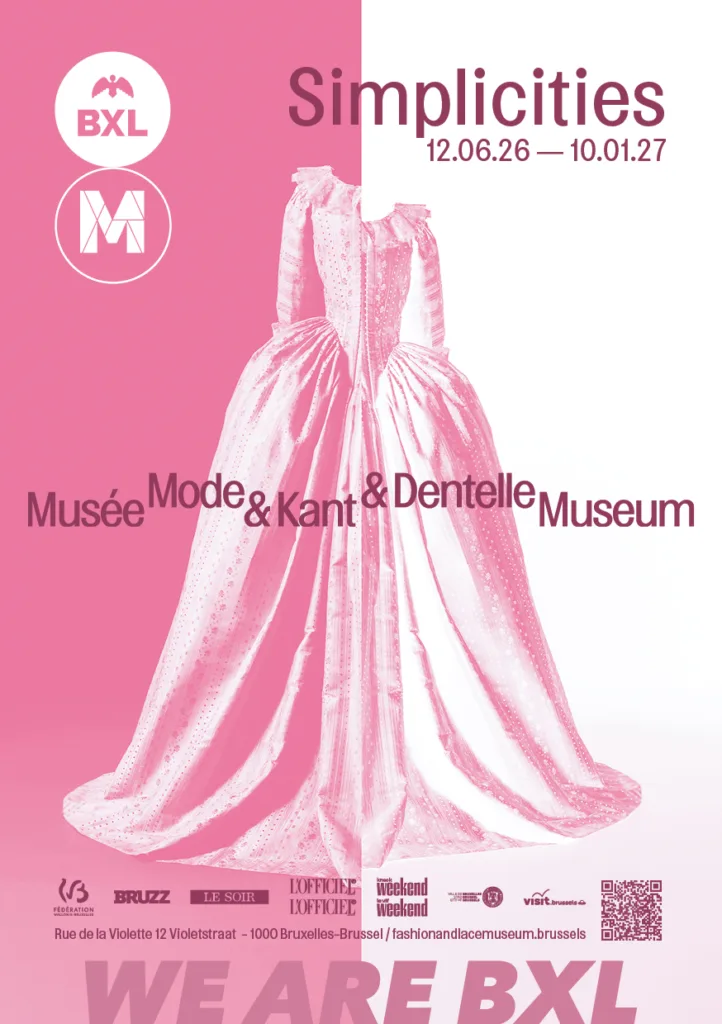
The Fashion & Lace Museum invites you to explore simplicity in clothing. Spanning more than two centuries of history, this new exhibition looks at the times when people favoured purity, practicality, and naturalness in what they wore. Fashion is often associated with luxury, opulence, and novelty. Here, its function as a mirror of cultural and social change is examined. This is a subject that has previously received little attention.
Tracing the history of this quest for the natural and the authentic puts our contemporary concerns in a long-term perspective and prompts us to consider their ambiguities, tensions and grey areas.
Mathilde Semal, curator
Simplicities begins at the end of the 18th century. Enlightenment thinking and a concern with medicine and hygiene led to profound changes in outward appearance. This ‘return to nature’ meant a rejection of artifice, new cuts of clothing, breathable fabrics and an aesthetic vocabulary inspired by Antiquity. This fashion ideal came to reflect a new lifestyle that blended comfort, liberation of the body, and closeness to nature.
The exhibition consists of six chapters, each of which explores different aspects of simplicity. Drawn from across centuries of fashion, the pieces on display are presented alongside garments by contemporary designers such as Dries van Noten, Ester Manas, Issey Miyake, and Ann Demeulemeester, pointing to the continuities, comebacks, and contradictions of this aesthetic. Discover this overlooked facet of fashion history!
The journey mapped out by this exhibition
From the late 18th century to the present day, there have been several moments in the history of Western fashion when purity, practicality, and naturalness were an obvious response to periods of excess.
Mathilde Semal, curator
The exhibition consists of six thematic chapters that reflect the different ways in which simplicity was expressed. By bringing together and contrasting pieces from different periods, it highlights the continuities, comebacks, and contradictions of the aesthetic across the centuries:
- The liberation of the female body from dress-related constraints is a recurring theme in the history of fashion. The exhibition opens with a gown known as a Chemise à la Reine. This radically simple piece from the 1780s enters into a dialogue with a design by Martin Margiela. From more than two centuries later.
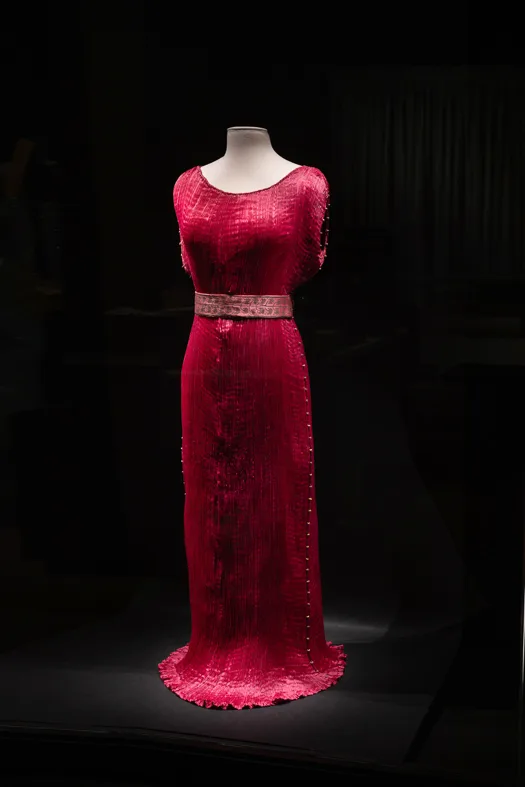
- The second chapter looks at the enduring influence of neo-classical aesthetics. Exemplified by the Empire dress. Mariano Fortuny, Madeleine Vionnet, Madame Grès, and Issey Miyake, among others, revisited the classical ideal in response to the modernity of their time.
- Whether with the fantastical approach taken in the 18th century or the libertarian spirit of the 1970s, the return to nature transcends different periods. For example, it inspired Dries van Noten and Jacquemus. They incorporate flowery fields, forests, and gardens into the design of their fashion shows. Today, the #cottagecore or #gorpcore movement, which reappeared after the 2020 health crisis, is perpetuating this interest in nature.
- Simplicity of clothing was also embodied in forms designed for practicality, mobility, and everyday wear. So tailcoats, frock coats, and English-style dresses found their way into wardrobes. The practicality of these garments looks ahead to sportswear.
- Simple and understated, men’s clothing influenced what women were wearing. Tailored suits reveal how borrowing from menswear became a tool for emancipation. Later, it became a vital element in work-related aspirations, culminating in the power dressing of the 1980s and 1990s.
- The exhibition’s final chapter offers an interpretation of the 1990s as a moment when different strands were pulled together. A new generation of designers gave simplicity the status of an aesthetic manifesto: Ann Demeulemeester in Belgium and Calvin Klein in the United States. Today, uncluttered designs like those of Nicolas di Felice for Courrèges continue the minimalist spirit with a contemporary vision.